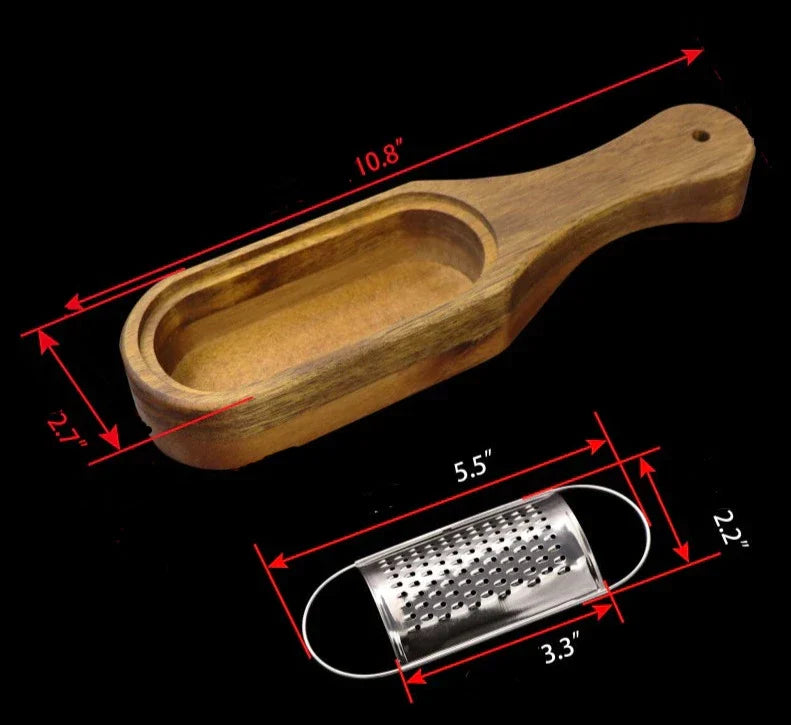
Acacia Wood Manual Cheese Grater with Integrated Collector and Removable Stainless Steel Blade
Acacia Wood Manual Cheese Grater with Integrated Collector and Removable Stainless Steel Blade


Couldn't load pickup availability
Parmesan grated over the pasta pot, and half the cheese ends up on the counter next to it
You hold the flat grater over the pot with one hand, the block of parmesan with the other, and each grating motion sends shavings flying left and right onto the stove. The cleanup takes longer than the grating itself. This grater with an integrated collector gathers all the grated cheese directly into the hollow of the wooden handle during operation, and you then pour it neatly wherever you want without any mess.
What sets this grater apart from classic flat graters
- Integrated collector in the wooden handle that collects the grated cheese directly under the blade during operation, meaning no more mess on the countertop or the need for an intermediate plate — a major difference from flat graters which require grating precariously over the pot.
- Solid acacia wood with natural grain that brings the warmth of organic materials unlike cold 100% metal graters, and offers a comfortable grip even with wet or greasy hands. Acacia is one of the most durable woods in the kitchen, naturally antibacterial and moisture-resistant.
- Removable stainless steel blade that can be removed after use for thorough cleaning of the grating surface (grated cheese gets stuck under the blade of single-piece graters and eventually develops invisible mold), thus providing significantly superior food hygiene over time.
- Ergonomic elongated one-handed shape that is held comfortably by the handle integrated into the body, leaving the other hand free to simultaneously hold the cheese block — a major difference from tall column graters which require both hands and a plate underneath.
- Versatile use beyond cheese that transforms the tool into a grater for cheese (Parmesan, Comté, Beaufort, Grana Padano, Pecorino) but also a zester for citrus fruits (lemon, lime, orange for desserts and cocktails), a nutmeg grater for white sauces and béchamel, a grater for fresh ginger for Asian recipes, and a garlic grater (provided it is thoroughly cleaned afterwards to avoid flavor transfer).
- Small hanging hole at the end of the handle that allows for vertical storage on a hook next to other wooden kitchen utensils (cutting boards, serving spoons), rather than flat in a drawer where the blade risks scratching other utensils.
For whom
For authentic Italian cuisine enthusiasts who grate their Parmesan fresh rather than buying pre-grated industrial cheese in a bag (a major taste difference between freshly grated Parmesan and cheese that dries in a modified atmosphere bag), cocktail and pastry lovers who regularly zest their citrus to flavor their preparations, Asian cuisine enthusiasts who grate fresh ginger for their woks and soups, home cooking enthusiasts who use freshly grated nutmeg for their béchamels and gratins, durable kitchen equipment enthusiasts who prefer real wood and stainless steel over disposable plastic, renters furnishing their kitchen without large investments, young adults furnishing their first apartment with quality equipment, and practical gifts for someone who cooks a lot.
And daily use over time
For first use, wash the grater by hand in warm soapy water with a soft sponge to remove any manufacturing residues, rinse with clear water, and dry immediately with a clean cloth. If the blade is removable (depending on the model), disassemble it for the first deep cleaning before reassembling. For cheese grating technique, hold the grater with one hand by the wooden handle, in a slightly downward inclined position so that the grated cheese slides naturally into the integrated collector during operation. Grasp the cheese block with the other hand and rub it on the grating surface with regular and firm back-and-forth movements. For hard cheeses (Parmesan, Grana Padano, Pecorino Romano), apply firm pressure — hard cheeses require more force than Emmental or Gruyère. For semi-hard cheeses (young Comté, Beaufort, Abondance), moderate pressure is sufficient. Avoid very soft cheeses (fresh mozzarella, ricotta, fresh cheeses) which do not grate and end up clogging the grating surface. For citrus fruits, hold the fruit firmly and pass it over the grating surface, avoiding going down to the bitter white pith (the white area under the colored zest adds unpleasant bitterness). Rotate the fruit regularly to expose a new area after each pass. For fresh ginger, first peel the area to be grated with the back of a spoon (traditional technique that preserves the flesh without waste), then grate firmly in movements perpendicular to the fibers to obtain a fine puree without fibers. For nutmeg, hold the nutmeg between your thumb and forefinger, and grate in short, precise movements directly over the dish to be flavored — a few passes are enough to generously flavor a béchamel or pasta gratin. For pouring after grating, hold the grater over the serving dish, tilt gently forward or tap the handle to slide the contents of the collector into the dish. The hollow shape of the collector allows for precise and mess-free pouring. For immediate cleaning after each use, first brush the grating surface with a used toothbrush to remove any cheese residues stuck between the perforations (important step — cheese that dries in the grater becomes very difficult to remove and can develop odors). If the blade is removable, disassemble it to access both sides of the grating surface and the hollow of the wooden collector. Wash the stainless steel blade in warm soapy water with a soft sponge or brush, rinse thoroughly with clear water, and dry immediately with a clean cloth. For the acacia wood collector, wash by hand in warm soapy water with a soft sponge (never prolonged soaking), rinse and dry completely with a clean cloth. NEVER put the grater in the dishwasher — prolonged hot water and aggressive detergents would irreparably degrade the acacia wood (swelling, cracking, discoloration) and the steel blade can lose its sharpness after several intensive cycles. This is the most common maintenance error with this type of mixed wood-metal utensil and the #1 cause of their premature end of life. For deep cleaning every 2 to 4 weeks (depending on frequency of use), disassemble the blade if possible, wash each part separately with care, and for the wooden collector, occasionally apply a damp baking soda paste to neutralize any residual odors (garlic, onion, strong cheeses). Rinse well and dry. Every 6 to 12 months, nourish the wood by applying a thin layer of food-grade mineral oil with a soft cloth, rubbing in the direction of the grain. Let it penetrate for 20 to 30 minutes, then wipe off any excess. This operation preserves the suppleness of the wood, prevents cracking due to drying out and repeated contact with the moisture from fresh cheese. Avoid olive oil or common vegetable oils which can go rancid in the wood fibers over time. For the stainless steel blade, maintenance is minimal — quality stainless steel does not rust or tarnish with normal use. If the blade loses its sharpness after several years of intensive use (grating becomes more laborious than before), it is generally time to replace the entire unit rather than trying to sharpen it at home (fine graters are difficult to sharpen correctly without specific tools). For accidental impacts (grater falling on the kitchen tiles), acacia wood withstands impacts well without breaking, but can crack at the ends of the handle in case of a violent fall. For daily storage, hang the grater by the hole at the end of the handle on a wall hook next to other wooden utensils, or store it flat in a drawer separated from metal cutlery (the steel blade can scratch other utensils if they are in direct repeated contact). For typical lifespan, expect 5 to 10 years of regular use depending on the care taken with maintenance and absolute avoidance of the dishwasher.
For those who want freshly grated Parmesan without the chore of cleaning a counter covered in shavings.
Shipping Information
Shipping Information
At Novana, you always enjoy free shipping. Not completely satisfied with your purchase? You can return your product within 30 days. Feel free to contact us for help with your return.
30-Day Hassle-Free Return
30-Day Hassle-Free Return
Not satisfied? No worries! At Novana, you have 30 days to return your order hassle-free. We make sure your shopping experience is smooth and trouble-free, so you can always shop with us with confidence.