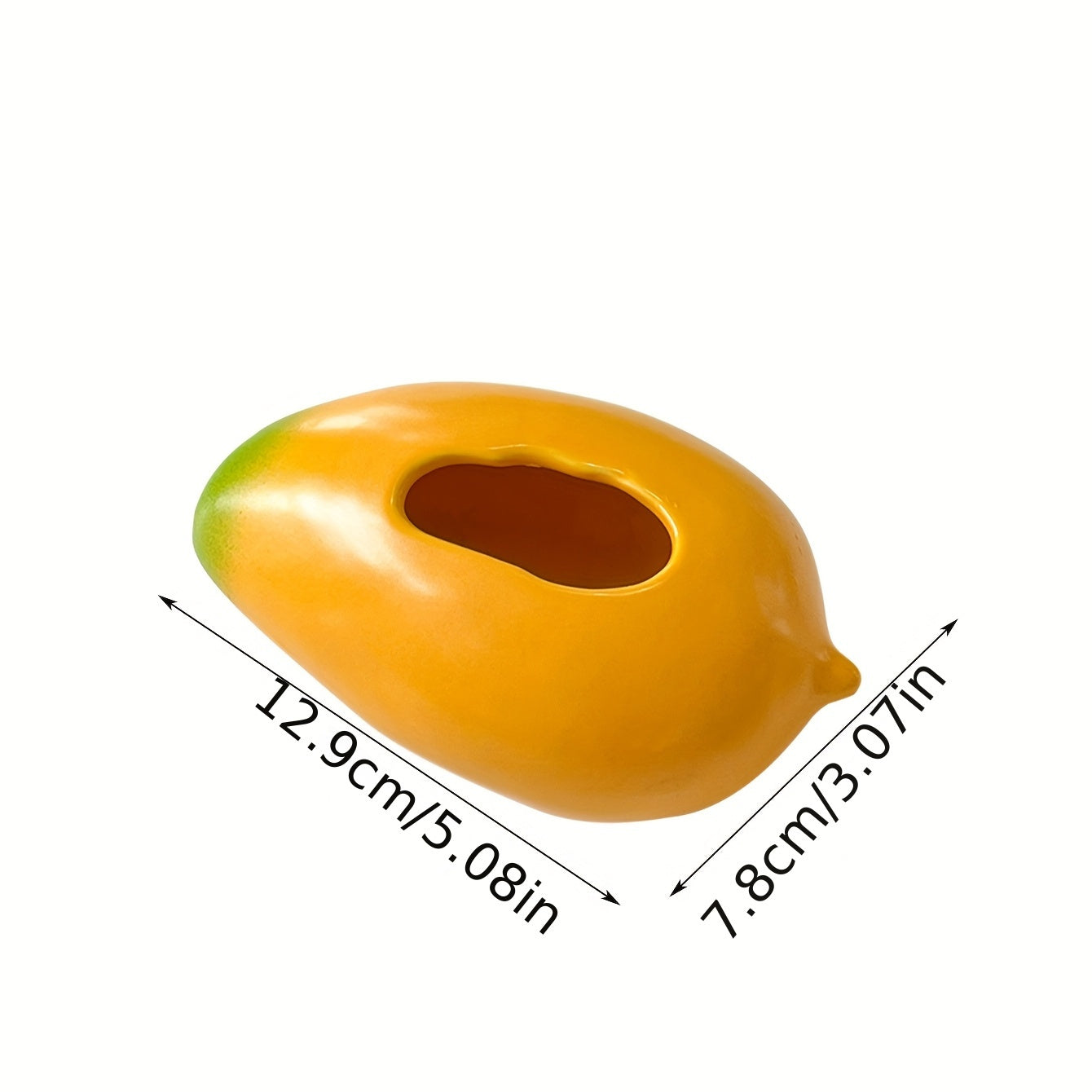
Mango-Shaped Ceramic Flower Pot with Glossy Glaze for Indoor Plants
Mango-Shaped Ceramic Flower Pot with Glossy Glaze for Indoor Plants


Couldn't load pickup availability
Kitchen shelf covered with identical round white pots, and a new pothos still looking for its place
You've accumulated minimalist cachepots from big brands, and they all look alike. The wall behind them is starting to resemble a store shelf rather than a lived-in interior. This ceramic pot mimics a fully ripe mango lying down – the plant seems to grow directly from the fruit, turning the decoration into a fun, eye-catching wink.
Why this pot changes the vibe of your plant collection
- Sculpted shape faithful to a real mango — the elongated, slightly rounded silhouette reproduces the exact proportions of a ripe tropical fruit, with the slight tip and the stem opening represented by the plant opening. The result makes visitors smile even before they notice the plant growing from it.
- Glossy glaze with natural gradient — the ceramic finish combines several superimposed glaze layers to create the characteristic gradient of a freshly ripened fruit: golden yellow over most of the surface, transitioning to light green on the still slightly immature tip. A faithful imitation that distinguishes this pot from uniform-colored molded ceramics.
- Flattened base for stability at rest — unlike spherical fruit pots that roll on flat surfaces, the base is slightly flattened so the mango remains stable once placed. No risk of tipping over at the slightest brush or cloth pass during cleaning.
- Format suitable for spreading or trailing plants — the opening on top allows foliage to fan out above the fruit, completing the illusion of a germinating fruit. Particularly successful with a golden pothos, a philodendron, a silver scindapsus, a small spider plant, or compact herbs like basil or chives.
- Solid and substantial ceramic — the mass of the material stabilizes the pot even when the plant grows larger above it, and offers a true object presence in the hand, different from lightweight plastic. Ceramic ages well without deforming, unlike synthetic resins that can yellow or soften with heat.
- Compact format for multiple locations — the discreet size allows this pot to be placed on the kitchen counter between the toaster and coffee machine, on a living room shelf among books, on a bedside table next to the alarm clock, or on the edge of a bathtub in the bathroom. Multiplies installation possibilities compared to a large floor pot.
Designed for lovers of playful decor who want to move beyond impersonal white minimalism, for indoor plant enthusiasts who already have a substantial collection and are looking to vary their containers, for fans of Mediterranean and exotic cuisine who want to evoke tropical fruits in their decor, for young parents who decorate the kitchen with fun elements for children (who learn to recognize fruits with everyday objects), for birthday or housewarming gifts for a loved one who appreciates visual humor, and for those who want to add warm color (yellow and green) to an interior dominated by neutral beige-white-grey tones.
What plant to choose and how to care for it daily?
When choosing a plant, favor species that thrive in compact pots and have a trailing or spreading habit to complete the illusion of a germinating fruit. The best candidates: golden pothos and its varieties (Epipremnum aureum), climbing philodendron, scindapsus pictus, dwarf spider plant (Chlorophytum comosum), miniature common ivy, or string of pearls (Senecio rowleyanus) for a spectacular trailing effect. For kitchen use, you can also plant miniature herbs: compact basil, chives, lemon thyme, flat-leaf parsley – practical for having fresh herbs handy while preparing meals. Avoid plants with deep roots (ficus, palms, citrus) that would feel too cramped in the limited volume of the pot. Also avoid plants that require a lot of watering (calathea, tropical ferns) that might not tolerate the lack of a drainage hole, which is characteristic of this type of decorative pot. For planting, most of these decorative ceramic pots do not have a drainage hole at the bottom. Two solutions: either use the pot as a cachepot, keeping the plant in its original plastic pot (you remove the plastic pot to water in the sink, let it drain completely, then put it back in the mango cachepot); or plant directly with a draining layer – place 2 to 3 cm of clay balls or gravel at the bottom of the pot before filling with potting mix, which creates a drainage zone to prevent roots from rotting in stagnant water. For watering a pot without drainage, precisely measure the amount of water provided: for a pot of this size (12 to 13 cm), use 2 to 3 tablespoons of water per watering, no more. It is better to water a little and more often than to flood it once. To check the actual need for watering, push your finger 2 cm into the soil – if it is still moist, wait a few days; if it is dry, water moderately. For light, place the pot in a bright spot but without intense direct sun for hours (indoor plant leaves burn in midday sun behind a window). Indirect natural light or 1-2 meters from an east or west-facing window suits most of the mentioned plants. For maintenance of the pot itself, dust it once a month with a dry microfiber cloth using gentle movements. For more noticeable stains (soil marks, dried watering splashes), use a slightly damp cloth with clear water – avoid abrasive sponges that would eventually scratch the glossy glaze over several months of repeated use. For limescale deposits (visible as a white film around the watering area), wipe with a cloth with a little diluted white vinegar, absolutely avoiding prolonged contact with the painted glaze which could tarnish over the years if acid is in repeated contact. If the plant needs repotting because it has outgrown the mango pot, transplant it into a larger pot and keep the mango for a new cutting or a new miniature plant – the decorative object has a lifespan independent of the plant it houses. For long-term storage (moving, seasonal redecoration), wrap the pot in bubble wrap or newspaper to protect it from shocks; ceramic cracks or breaks if dropped on a hard corner, and the glazed finish is not invisibly repairable once damaged.
For those who want their plants to live in objects that resemble them, not in pots that resemble each other.
Shipping Information
Shipping Information
At Novana, you always enjoy free shipping. Not completely satisfied with your purchase? You can return your product within 30 days. Feel free to contact us for help with your return.
30-Day Hassle-Free Return
30-Day Hassle-Free Return
Not satisfied? No worries! At Novana, you have 30 days to return your order hassle-free. We make sure your shopping experience is smooth and trouble-free, so you can always shop with us with confidence.