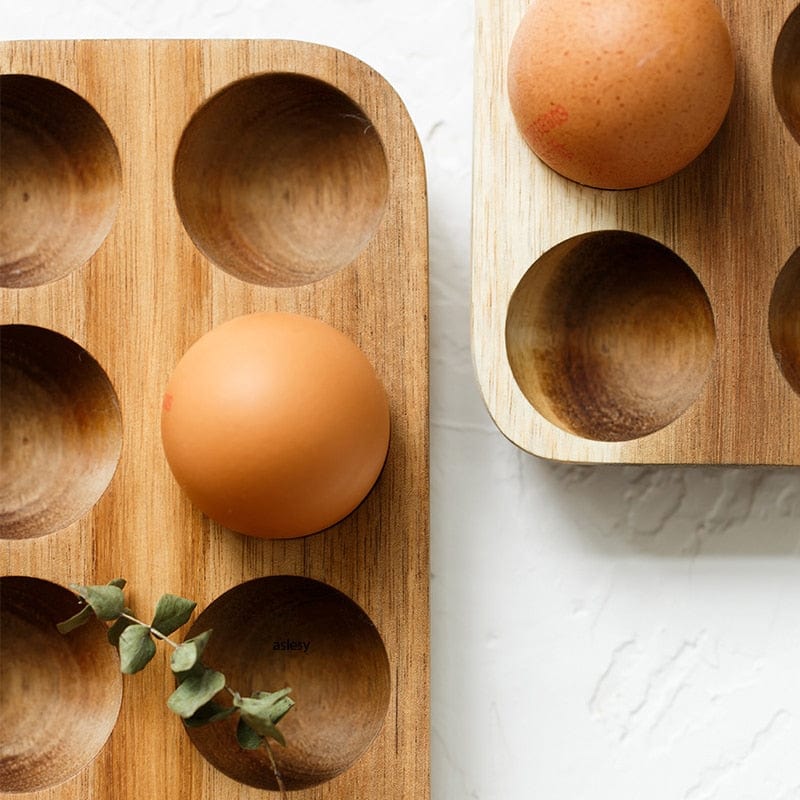
Solid Wood Egg Tray with Carved Grooves for Storage and Display
Solid Wood Egg Tray with Carved Grooves for Storage and Display


Couldn't load pickup availability
Supermarket cardboard egg carton placed in the refrigerator, and half of them end up cracked because the eggs roll every time the door is opened
You buy fresh eggs from a market producer or a neighborhood farm, and they end up being mistreated in a cardboard box that deforms and allows the eggs to roll at the slightest movement. This solid wood egg tray with carved indentations holds each egg in place, can be moved from the refrigerator to the countertop during cooking, and transforms utilitarian storage into a decorative element in a cottage kitchen.
What distinguishes this format from classic cardboard egg cartons
- Calibrated round indentations carved into the solid wood which individually cradle each egg in its dedicated slot, so eggs no longer touch or clink together during handling — a major difference from cardboard egg cartons that deform and allow eggs to roll or collide with each other every time the refrigerator is opened.
- Solid wood with visible natural grain which provides the warmth of organic materials unlike industrial cardboard or white plastic boxes. Wood is naturally antibacterial (tannins and essential oils partially inhibit bacterial growth) and neutral in contact with porous eggshells.
- Rustic chic cottage aesthetic which transforms the utilitarian object into a decorative element on the kitchen countertop, so the tray can remain on display permanently rather than being hidden in the refrigerator. The contrast between brown or white eggshells and light wood naturally creates a photogenic composition.
- Flat base stability which keeps the tray stationary on the countertop or kitchen table even when an egg is picked up or put down — a major difference from vertical cylindrical holders or lightweight plastic boxes that tip over at the slightest imbalance.
- Versatility for kitchen use and presentation which transforms the tray into permanent storage on the countertop near the stove (eggs within reach for morning omelets, Sunday pastries, birthday cakes), a decorative display for entertaining to showcase colored Easter eggs, a culinary styling accessory for kitchen photos, or a respectful alternative to cardboard boxes for zero-waste consumers.
- Format adapted to a household's weekly consumption which covers the needs of a standard week of eggs (a dozen generally covers the needs of a family of 4 for 5 to 7 days depending on consumption frequency), with gradual refilling as purchases are made at the market or from the producer.
Who is it for
For home cooking enthusiasts who buy their fresh eggs directly from a producer, farm, or market and want to store them properly, rustic chic cottage kitchen enthusiasts who appreciate utilitarian objects made of natural materials visible on the countertop, zero-waste enthusiasts who reject single-use cardboard boxes and want a durable storage solution, baking enthusiasts who use a lot of eggs and appreciate having their stock visible and accessible rather than buried in the refrigerator, culinary styling enthusiasts for social media who are looking for photogenic accessories for their kitchen compositions, renters who equip their kitchen without major investments, young adults who want a neat kitchen down to the details of food storage, practical gifts for a loved one who raises chickens or cooks a lot, and everyone who wants even eggs to have a real dedicated place rather than being mistreated in a box that deforms.
And daily, long-term use
For first use, hand wash the tray in warm soapy water with a soft sponge to remove any manufacturing residues, rinse with clear water, and dry immediately with a clean cloth. Never let the wood air dry — prolonged humidity penetrates the fibers and can create irreversible dark marks. For optimal positioning according to your culinary habits, choose the location that corresponds to your primary use. On the kitchen countertop in the immediate vicinity of the stove, the tray is visible and accessible for morning omelets, lunch carbonara pasta, or weekend pastries. Storing at room temperature (not in the refrigerator) is actually the traditional French practice for fresh eggs — unlike American or Anglo-Saxon practice, in France, eggs sold with their natural cuticle (a natural protective layer of the shell) can be stored at room temperature for up to 28 days after the laying date. This method allows for more consistent cooking (cold eggs tend to crack in boiling water) and preserves optimal taste qualities. However, avoid sudden temperature changes: an egg left at room temperature and then returned to the refrigerator can develop condensation on the shell, promoting bacterial penetration. Stick to a single storage method. For refrigerator storage, you can also use the tray directly inside the fridge (depending on the model, check your shelf dimensions before purchase). Ideally, place the tray on an interior shelf rather than in the door (where temperatures fluctuate more with each opening). For egg rotation in stock, place newly purchased eggs at the back of the tray and use those at the front first — this rotation ensures that you always consume the oldest ones first. To identify the freshness of an egg if in doubt, the traditional water glass test remains reliable: submerge the egg in a glass filled with cold water. If it sinks flat to the bottom, it is very fresh (1-7 days). If it stands upright slightly at the bottom, it is still consumable (8-21 days). If it floats to the surface, it is too old and should be discarded. For regular tray maintenance, dust with a dry microfiber cloth once a week. If the tray contains an egg that has cracked or broken in place (accidental handling), immediately remove the broken egg, clean the affected indentation with a damp cloth in warm soapy water, rinse with a clean damp cloth, and dry completely. For deep cleaning every 2 to 4 weeks (depending on use), hand wash the tray in warm soapy water with a soft sponge, rinse with clear water, and dry immediately and completely with a clean cloth. NEVER put the tray in the dishwasher — prolonged hot water and harsh detergents would irremediably degrade the wood (swelling, cracking, discoloration). Also avoid fully submerging the tray in water (washing with prolonged soaking) — a quick rinse under running water or with a damp sponge is largely sufficient. Every 6 to 12 months, nourish the wood by applying a thin layer of food-grade mineral oil or fractionated coconut oil with a soft cloth, rubbing in the direction of the grain. Let penetrate for 20 to 30 minutes, then wipe off any excess with a clean cloth. This operation preserves the flexibility of the wood, prevents cracks due to drying and repeated contact with possible moisture from fresh eggs. Avoid olive oil or common vegetable oils which can become rancid in the wood fibers over time. For accidental stains (broken egg that has leaked into an indentation, food splashes during nearby cooking), immediately blot with a damp cloth in warm soapy water, rinse with a clean damp cloth, and dry immediately. For any residual odors (very old egg discovered late), sprinkle dry baking soda in the affected indentation, let sit for several hours, then gently brush and wipe. For accidental impacts (tray falling from the countertop), solid wood handles impacts well without breaking, but can crack at the edges if it falls violently on a tiled floor. For temporary storage (moving, period of non-use), clean and dry the tray completely, wrap it in crumpled newspaper or a soft cloth to protect the finish during transport, and store away from prolonged humidity and direct sunlight which could gradually dry out the wood. For typical lifespan, expect several decades of use provided that oiling is respected and the dishwasher is absolutely avoided — well-maintained quality solid wood lasts for several generations, gaining a personal patina.
For those who want fresh eggs from the producer to be stored with the respect they deserve, not mistreated in a cardboard box that deforms.
Shipping Information
Shipping Information
At Novana, you always enjoy free shipping. Not completely satisfied with your purchase? You can return your product within 30 days. Feel free to contact us for help with your return.
30-Day Hassle-Free Return
30-Day Hassle-Free Return
Not satisfied? No worries! At Novana, you have 30 days to return your order hassle-free. We make sure your shopping experience is smooth and trouble-free, so you can always shop with us with confidence.